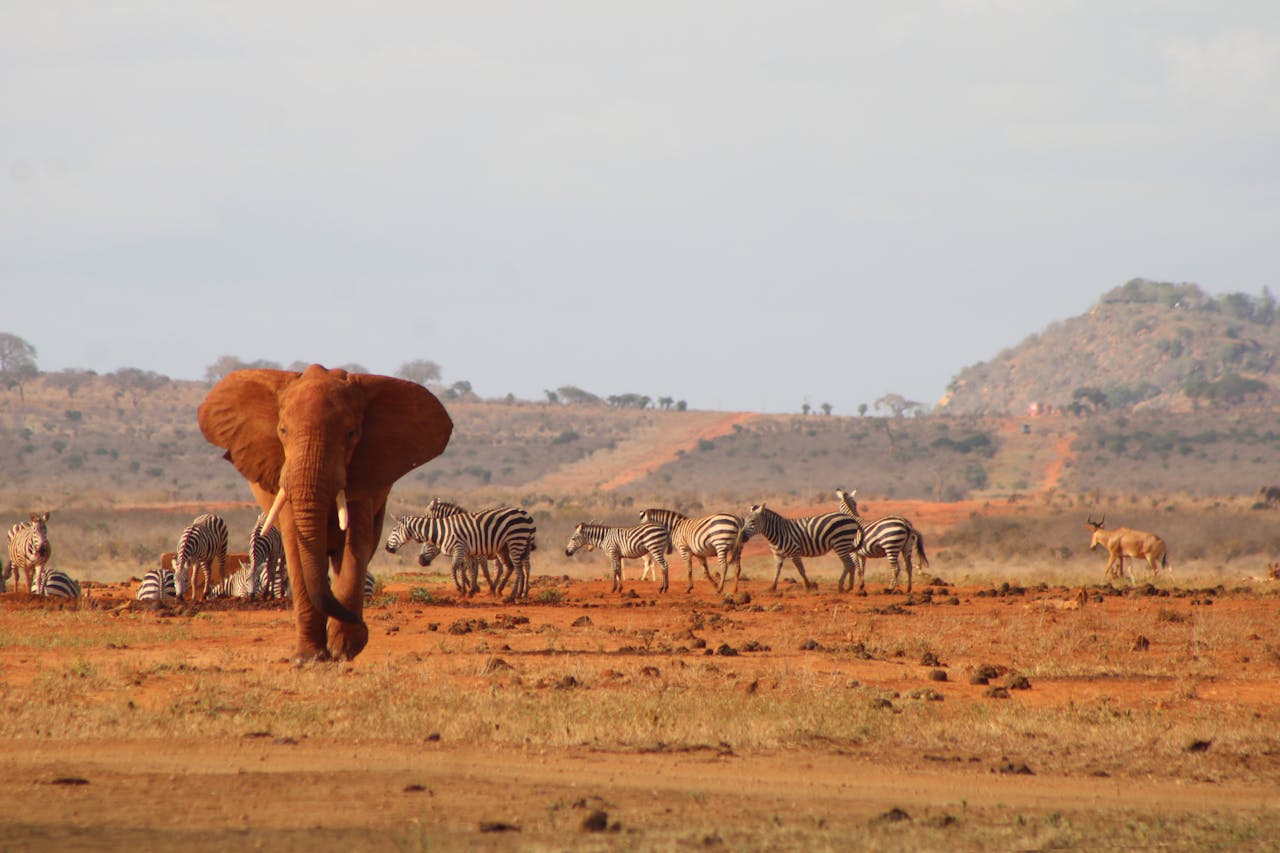
What if we told you that in less than 24 hours, you could go from floating in crystal-clear Indian Ocean waters to locking eyes with an angry buffalo in Kenya's legendary red-earth wilderness? This isn't a travel fantasy, we promise. It's the Diani-to-Tsavo experience that redefines what's possible in a single Kenyan adventure.
Dreamy? One moment you're savoring fresh seafood with your toes in pristine sand, watching traditional dhows sail in the turquoise waters off Diani: the next, you're heart-deep in elephant country where ancient giants roam landscapes painted crimson by volcanic soil.
Ready to discover why this impossible-sounding combination has become Kenya's most addictive travel experience?
Why Diani Beach is Your Perfect Safari Starting Point
Diani Beach sits about 40 kilometers south of Mombasa on Kenya's coast. Mombasa is the gateway to the Kenya Coast and serves as the ideal launching pad for many Tsavo safari adventures.
The logistics are simple. Diani's proximity to both Tsavo East and Tsavo West National Parks means you can be watching elephants bathe in red dust within 3 hours of leaving your beachside resort. Most safari operators offer pickups directly from Diani Beach hotels at the crack of dawn.
Tsavo National Park: Kenya's Largest Game Reserve Complex
Tsavo isn't just one park but two massive reserves covering a combined area larger than the state of Massachusetts or the Republic of Slovenia! Together, they form one of the world's largest game reserves, spanning over 22,000 square kilometers.
Tsavo East: Land of the Red Elephants
Tsavo East is famous for its red elephants. These are regular African elephants that dust themselves with the region's red soil for protection against insects and the sun, acquiring a distinct red tint. The park's flat terrain and sparse vegetation make game viewing exceptional.
Unlike crowded parks elsewhere, Tsavo East offers expansive terrain that serves up intimate wildlife encounters where you might have an entire pride of lions to yourself. The Galana River cuts through the landscape, creating lush riverine vegetation that attracts wildlife to the banks. Another wildlife hotspot is the Kanderi Dam area: Kanderi Swamp is a unique freshwater wetland teeming with diverse plant and animal life, all adapted to its wet conditions. It serves as a vital habitat for a wide array of wildlife, including elephants, buffalo, and numerous bird species.
Planning Your Diani-Tsavo Safari Adventure
Best Time to Visit
The optimal safari season runs from June through October and January through March, when rainfall is minimal and wildlife congregates around permanent water sources. During these dry periods, animals are easier to spot and road conditions are at their best.
For American/European travelers, this timing aligns well with summer and winter vacation periods.
Safari Options from Diani Beach
Day Safaris: Perfect for travelers with limited time, day trips typically focus on Tsavo East due to its closer proximity to Diani (approximately 2 hours). These 12-hour adventures include game drives, lunch at a safari lodge, and return to your beach hotel by evening.
2-3 Day Safaris: The sweet spot for most travelers, these trips allow you to experience both Tsavo East and West. You'll stay in safari lodges or camps within the parks, maximizing your wildlife viewing time during dawn and dusk when animals are most active.
Extended Safaris: 4-7 day adventures can include additional destinations like Amboseli National Park or private conservancies around Tsavo for more exclusive wildlife experiences.
What to Expect: A Day in Tsavo
Your safari day begins before sunrise with hot coffee or tea as your guide prepares for the morning game drive. The African bush awakens gradually first the birds, then herbivores emerging to feed in cool morning air, followed by predators completing their nighttime hunts.
Game drives in Tsavo offer diverse experiences. You might encounter elephant families crossing the road meters from your vehicle, watch lions lounging beneath acacia trees, or witness hundreds of buffalo moving across the plains like a living carpet.
Lunch breaks typically occur at safari lodges within the parks, where you can relax and spot wildlife visiting nearby waterholes. Many lodges feature elevated viewing platforms providing panoramic views of the surrounding wilderness.
Practical Considerations for Travelers
Getting There
Most visitors fly into Nairobi's Jomo Kenyatta International Airport, then take a connecting flight to Diani Airport (about 1 hour) or drive directly to Diani Beach (4-5 hours). Some travelers fly directly into Mombasa's Moi International Airport and transfer by road to Diani Beach.
Visa Requirements
Visitors will need a visa for Kenya, easily obtained online through the eVisa system for $51. Your passport needs at least six months' validity and two blank pages.
Health Precautions
Kenya requires a yellow fever vaccination if you're arriving from a yellow fever endemic country. Malaria prophylaxis is recommended for coastal and safari areas. Consult your doctor 4-6 weeks before departure.
Packing Essentials
Neutral-colored clothing (khaki, olive, beige)
Wide-brimmed hat and sunglasses
High-SPF sunscreen
Binoculars for wildlife viewing
Camera with extra batteries and memory cards
Insect repellent
Light jacket for early morning game drives
Making the Most of Your Diani Beach-Safari Combination
The beauty of the Diani-Tsavo combination lies in its variety. Start with 2-3 days of beach relaxation to recover from jet lag and adjust to the local time zone. The Indian Ocean's warm waters, coral reef snorkeling, and beachside massages provide the perfect prelude to your safari adventure.
After your Tsavo experience, return to Diani for a few more days to decompress and process the wildlife encounters you've witnessed. Many travelers find this rhythm ideal for beach time to anticipate the safari, then more beach time to savor the memories.
Beyond the Big Five: Tsavo's Hidden Gems
While spotting lions, elephants, and leopards dominate most safari wish lists, Tsavo offers unique experiences backed by impressive biodiversity statistics. This vast wilderness, established in 1948, stands as Kenya's largest national park system, later divided into Tsavo East and Tsavo West for administrative purposes.
Mzima Springs: An Aquatic Oasis
Mzima Springs produce an impressive 250 million liters of water on a daily basis, making it one of the largest natural springs in Kenya. This remarkable water source serves as home to a carefully documented wildlife population. The hippo population is stable at around 20 individuals, having recovered from drought impacts in 2009.
The springs attract Nile crocodiles that have adapted to this unique ecosystem, with the upper pool particularly popular with hippos, while the crocodiles have retreated to the lower pool. An underwater viewing chamber has been built in one of the pools, offering visitors unprecedented views of these prehistoric predators in their natural habitat.
Exceptional Bird Diversity
Tsavo's bird life surpasses most expectations, with documented populations varying between the park's two sections. Over 500 bird species have been recorded in Tsavo East, while Tsavo West National Park hosts more than 400 bird species. Combined, this makes Tsavo home to over 500 distinct bird species across its varied ecosystems.
Create Lifelong Memories with a Diani Beach + Tsavo Safari
A Diani Beach to Tsavo safari represents more than just a vacation. It is a transformative experience that connects you with Africa's wild heart while providing the comfort and relaxation of a beach holiday. The contrast between lounging on pristine beaches and tracking wildlife through ancient landscapes creates memories that will last a lifetime.
The magic of Kenya lies in how the country seamlessly blends adventure with relaxation, creating the perfect safari experience for travelers seeking both excitement and comfort in one unforgettable adventure.